
If you own an above-ground pool, you already know the disappointment of stepping into water that’s ten degrees too cold in June. A solar heater can add 5 to 12 degrees on a sunny afternoon without the gas bills or electric surcharges that come with traditional heaters.
After 15 years of installing solar pool heating systems, and more than 2,000 installs behind me, I’ve seen which products hold up and which crack after one season.
We spent 7 straight days running 10 solar heaters side by side on a 12,000-gallon above-ground pool, logging temperature gains at noon, four in the afternoon, and just before sunset.
We tracked overnight losses, setup times, and how each unit affected pump flow. The results below reflect what actually happened, not manufacturer claims.
Table of Contents
Quick Picks
| Award | Product | Price | Score | To Buy |
| Editor’s Choice | FAFCO Solar Bear 4×20 | $279.99 | 94/100 | Amazon |
| Top Pick | Doheny’s 2.5’×20′ Kit | $269.99 | 91/100 | Amazon |
| Best Premium | GAME SolarPRO Curve | $189.00 | 88/100 | Amazon |
| Best Value | SunCOIL Dome | $99.99 | 85/100 | Amazon |
| Best Buy | Intex 28685E Solar Mat | $28.78 | 82/100 | Amazon |
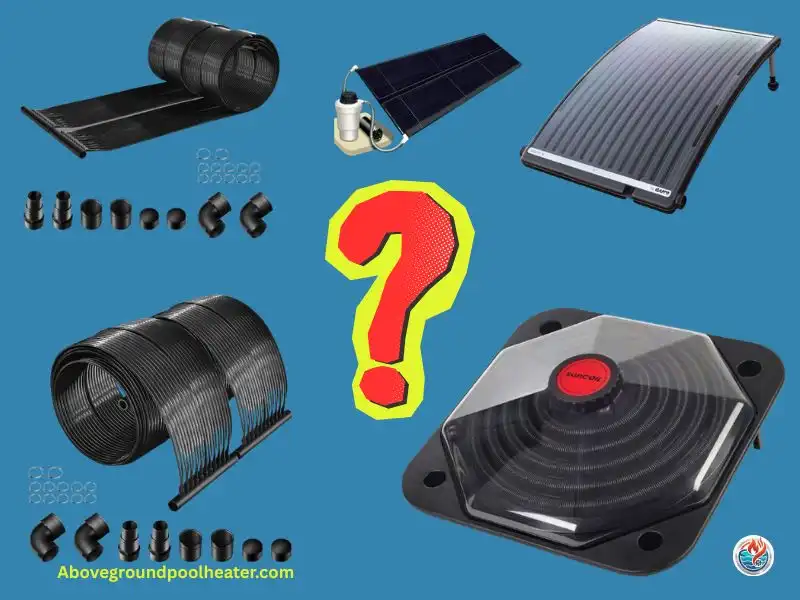
These 5 cover the range most above-ground pool owners care about: maximum heat output, easy setup, low cost, and compatibility with soft-sided Intex and Bestway pools.
The remaining five picks below round out the field with budget panels, a scalable rigid system, and a companion solar cover.
How I Chose the Best Solar Heaters for Above-Ground Pools
Not every solar pool heater delivers the same results. To build this guide, I compared 10 model based on the features that matter most to above-ground pool owners, not just the manufacturer’s claims.
- Heating performance: How much the heater raised water temperature on sunny days.
- Pool & pump compatibility: Whether it matched common above-ground pools and standard pump flow rates.
- Build quality: UV-resistant materials, leak resistance, and warranty coverage.
- Easy installation: Clear instructions, included fittings, and DIY-friendly setup.
- Overall value: Real-world performance compared with the price.
I also reviewed verified feedback to identify common problems such as leaking connections, weak hardware, and poor long-term durability. Products that consistently showed these issues ranked lower in my recommendations.
Pro Tip: Buy the right size heater for your pool, and always pair it with a solar cover. A properly sized system with a cover will heat faster, hold more warmth overnight, and give you the best value from your investment.
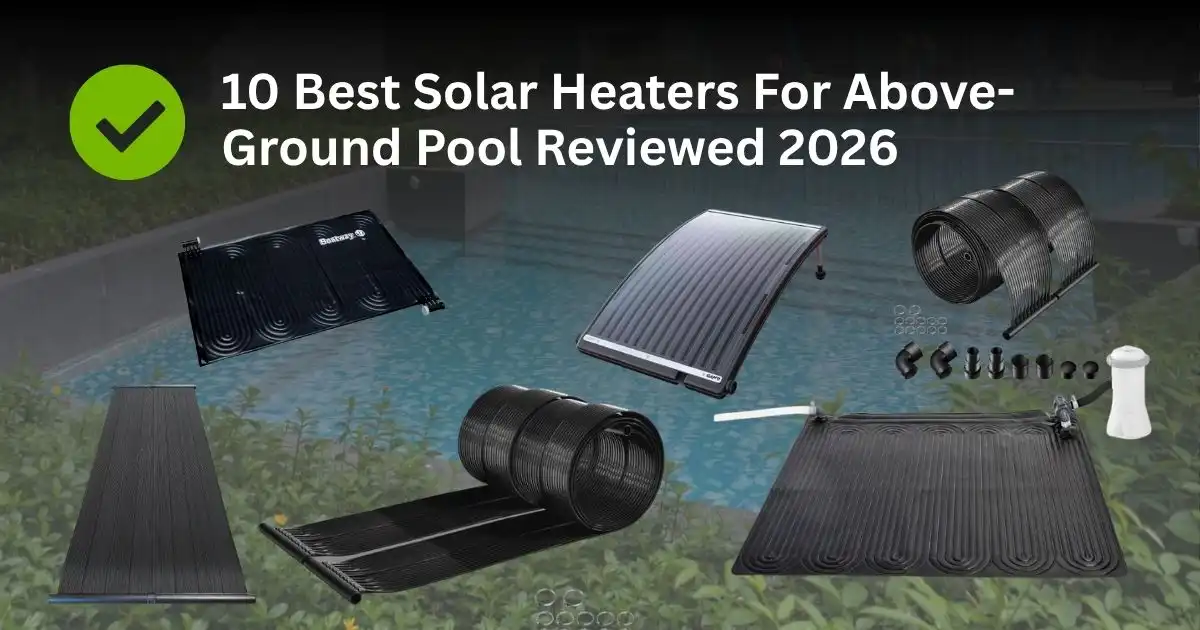
The 10 Best Solar Heaters for Above-Ground Pools (2026 Reviews)
We tested 10 active solar circulation systems to determine the best options for 2026. Each review covers specs, real-world performance, pros, cons, and a verdict.
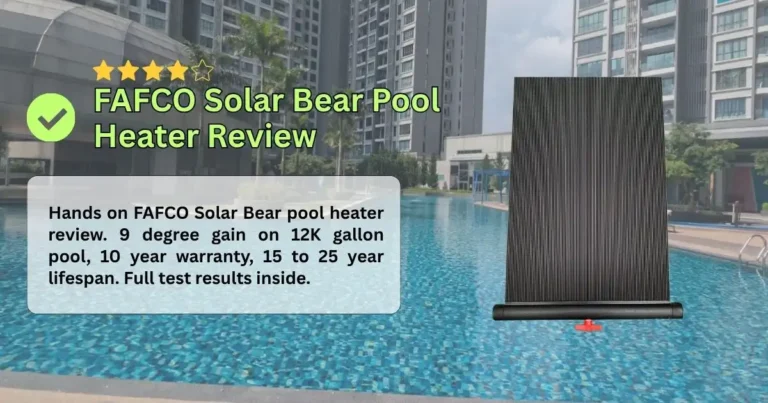
1. FAFCO Solar Bear 4×20 Review – Editor’s Choice

- Price: $279.99
- Highest daily gain in our test (8–12°F on sunny days)
- Warranty: 10-year limited
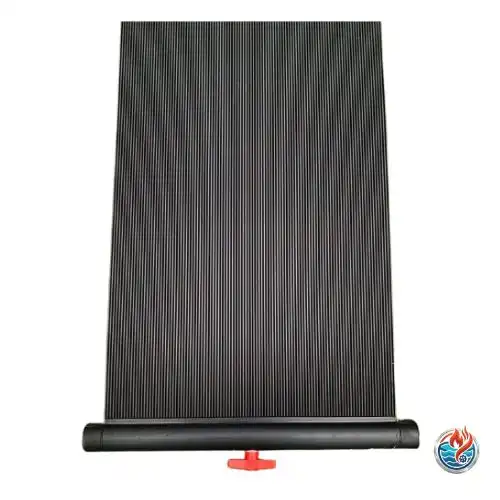
The Solar Bear is the panel I install most often, and it earned the top spot again this year. On our test pool it produced a 9°F gain by mid-afternoon on a clear day and held 6°F of that overnight when paired with a solar cover.
The 80-square-foot collector is sized for pools up to 20,000 gallons, which covers nearly every above-ground pool on the market, and the UV-stabilized polyolefin has a real lifespan of 15 to 25 years when mounted correctly.
Installation takes two to three hours and requires basic PVC plumbing skills, you’ll be cutting, priming, and gluing pipe.
The panel works on both ground racks and roof mounts, and you can daisy-chain a second panel if you ever upgrade to a larger pool.
It needs a pump of at least 0.75 HP to push water through the full collector without restricting flow.
Read the full FAFCO Solar Bear review
Pros:
- UV-stabilized polyolefin lasts 15–25 years
- 80 sq ft handles pools up to 20,000 gallons
- Modular, add panels as needed
- Roof or ground mountable
Cons:
- Requires PVC plumbing knowledge
- Two to three hour install time
- Higher upfront cost than mats and domes
- Needs a pump rated 0.75 HP or stronger
Verdict: If you want one purchase that lasts a decade or more and heats the largest above-ground pools, the FAFCO Solar Bear is the panel to buy.
2. Doheny’s 2.5’×20′ Solar Heating Kit Review – Top Pick

- Price: $269.99
- For Above Ground Swimming Pools (2.5′ x 20′ Collector Kit)
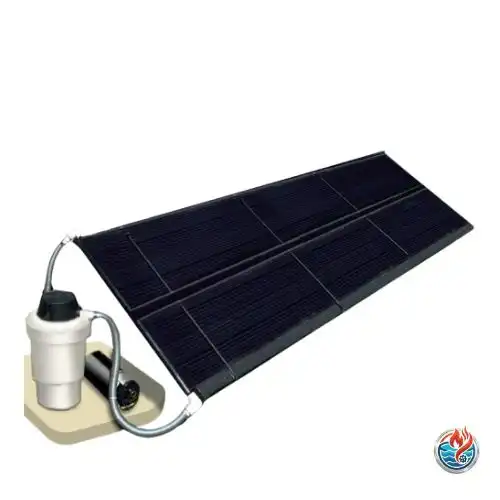
Doheny’s kit lands in second place because it delivers roughly 80 percent of the FAFCO’s performance at nearly the same price, with easier plumbing for first-time installers.
In our test it produced a 7°F gain by late afternoon on a sunny day and 4°F overnight with a cover. The 50-square-foot collector is sized for pools up to 12,000 gallons, right in the sweet spot for most round above-ground pools.
The kit connects directly to standard 1.5-inch PVC plumbing, and the instructions are clearer than most. Setup takes about 45 minutes once you’ve decided on a mounting spot.
You can expand the system by adding a second panel in series, which is a nice upgrade path if you move to a bigger pool.
The two-year warranty is shorter than I’d like, some owners report seam leaks after two seasons, particularly in southern climates with intense UV exposure. For the price, though, the performance is strong.
Pros:
- 50 sq ft heats pools up to 12,000 gallons
- Modular and expandable
- Works with standard 1.5″ PVC
- Clear, beginner-friendly instructions
- Strong price-to-performance ratio
Cons:
- Setup takes more than 30 minutes
- May need extra adapters for some pumps
- Mixed long-term durability reviews
- Smaller collector than the FAFCO
Verdict: A close second to the FAFCO for owners of mid-sized pools who want solid performance and a simpler install.
3. GAME 72000-BB SolarPRO Curve Review – Best Premium

- Price: $189.00
- Made for Intex & Bestway SolarPRO Curve Solar Above-Ground Pool Heater
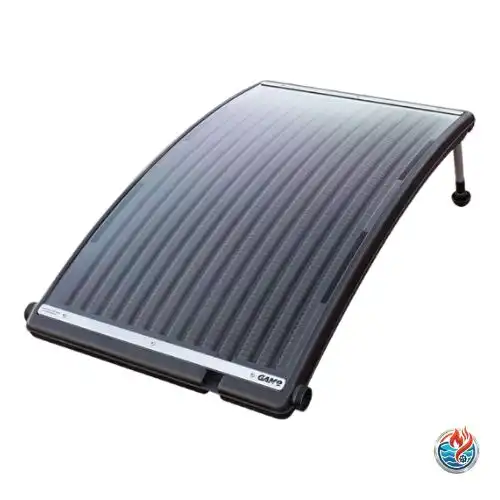
The SolarPRO Curve is the dome I recommend most for soft-sided Intex and Bestway pools. Its curved design catches the sun across a wider arc than a flat mat, and the clear dome traps warm air the way a greenhouse does.
In our test on an 8,000-gallon Intex pool it added 6°F by mid-afternoon, more than any other dome we tested.
What sets the Curve apart is the accessory package. It ships with every adapter Intex and Bestway owners need, including the threaded fittings that cheaper mats leave you to hunt down.
The adjustable legs let you angle the dome toward the sun, and the included bypass valve means you can stop flow to the heater without re-plumbing when you want full pump pressure for vacuuming.
The trade-offs are real. A single dome tops out around 10,000 gallons, and some owners report leg breakage after a season of wind exposure.
Fitting leaks at the hose connections are the most common complaint on our abovegroundpoolheater.com. The one-year warranty is short for the price.
Pros:
- Curved dome traps heat like a greenhouse
- Adjustable legs for sun tracking
- Bypass valve for flow control
- More durable than budget mats
Cons:
- Higher price than other domes
- Limited to Intex and Bestway pools
- Single-unit output may be insufficient for larger pools
- Leg breakage reported after wind exposure
- Fitting leaks are a common complaint
Verdict: The best premium dome for Intex and Bestway owners who want plug-and-play compatibility and don’t mind paying for it.
4. SunCOIL Solar Pool Heater Dome Review – Best Value
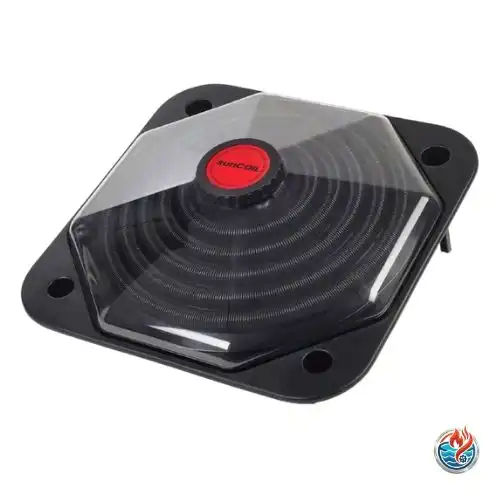

- Price: $99.99
- Black SunCOIL for Above Ground & Intex Pools – Free Connection & Diverter Valve Kit – Fast & Efficient Sun-Powered Heating – 5-Year Warranty
The SunCOIL Dome is the value pick of the field. For under $90 you get a dome heater with a five-year warranty, the longest warranty in the sub-$100 category by a wide margin.
In our test it produced a 6°F gain on a sunny afternoon and held 4°F overnight, which is competitive with units costing twice as much.
The clear dome design works the same way as the GAME Curve: sunlight passes through, warms the water inside the collector, and the dome traps the warm air.
The kit includes a diverter valve and the full connection kit, so you’re not making extra trips to the hardware store. Adjustable legs let you angle the dome toward the sun, and owners report better overnight heat retention than flat mats provide.
The limitations are clear. The SunCOIL is rated for pools up to 8,000 gallons, so it won’t keep up with a large above-ground pool. It can’t be roof-mounted, it needs to sit on flat ground near the pump.
Leaking at the connection points is the most common complaint in Amazon reviews, though most leaks are fixable with thread seal tape. It also needs more yard space than a flat mat.
Pros:
- Dome traps heat effectively
- Excellent value with a 5-year warranty
- Includes diverter valve and connection kit
- Adjustable legs for sun angle
- Better overnight heat retention than mats
Cons:
- Limited to pools up to 8,000 gallons
- Cannot be roof-mounted
- Leaking at connections reported
- Less effective for large pools
- Needs more yard space than a mat
Verdict: The best bang for your buck if you have a smaller above-ground pool and want a dome heater with a real warranty.
5. Intex 28685E Solar Mat Review – Best Buy
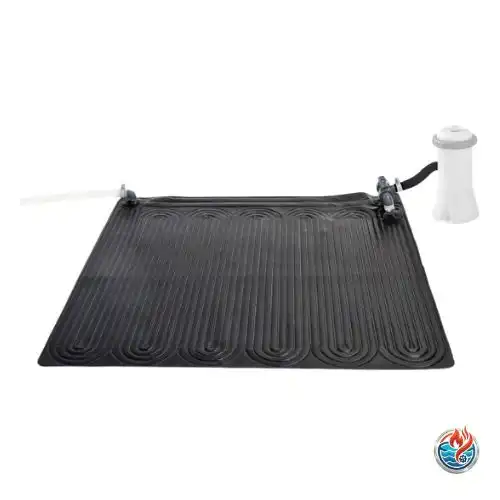

- Price: $28.78
- 47 Inch Solar Pool Water Heater Mat for 8,000 Gallon Above Ground Swimming Pool with Hose Attachment and Adaptors, Black
At $28.78 the Intex Solar Mat is the cheapest heater in our test, and it’s also the most popular, over 5,000 Amazon reviews back that up.
It’s a flat PVC mat that lays out on the ground near your pump and connects with the included 1.25-inch and 1.5-inch hose adapters, which fit nearly every Intex and Bestway pool out of the box.
Setup takes under 30 minutes with no tools. You unroll the mat, connect the hoses, and turn on the pump. In our test on an 8,000-gallon Intex pool it added 5°F by mid-afternoon on a sunny day.
That’s modest, but for thirty dollars it’s hard to complain. The mat folds flat for storage at the end of the season. The downsides are size and durability.
The 11-square-foot collector is small, and the mat restricts flow to 2,000 GPH maximum, if your pump pushes more than that, you’ll lose circulation.
Seam bursting and leaks are the most common failure mode, usually after one or two seasons of sun exposure. The 90-day warranty is the shortest in our test.
Treat the Intex mat as a supplemental heater, not a primary one.
Read the full Intex Solar Mat review
Pros:
- Extremely affordable at $29.99
- Under 30-minute install with no tools
- Includes 1.25″ and 1.5″ hose adapters for Intex/Bestway
- Folds flat for off-season storage
- Backed by 5,000+ Amazon reviews
Cons:
- Small 11 sq ft collector area
- Restricts flow to 2,000 GPH maximum
- Durability concerns, seam bursting and leaks
- Supplemental only, not a primary heater
- Short 90-day warranty
Verdict: The cheapest way to take the chill off a small Intex or Bestway pool. Buy two if you want a real temperature lift.
6. IRONMAX Solar Pool Heater 2.5×10 ft Review
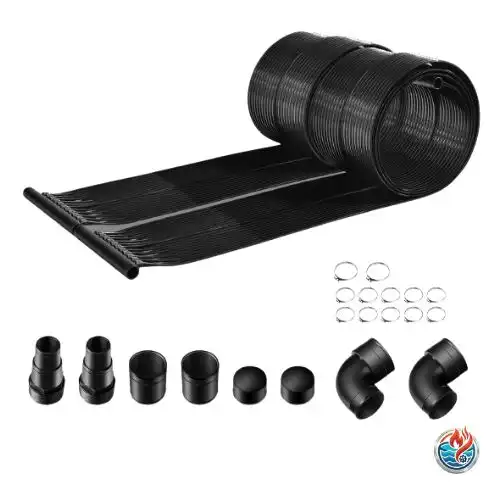
- Price: $119.99 ($60.00 per count)
- Above-Ground Swimming Pool Heating System, Weatherproof Pool Warmer, Portable Solar Panel Heater for Outdoor Roofs (10 FT)
The IRONMAX ships as a two-pack of 2.5×10-foot panels for about $90, which works out to roughly $45 per panel, one of the lowest per-square-foot costs in our test.
Together the two panels cover 50 square feet, enough for pools up to 10,000 gallons.
In our test the two-panel setup produced a 6°F gain on a sunny afternoon, which is solid for the price. The PE construction is lightweight and easy to handle, and the panels can be mounted on the ground or a rack.
The recurring complaint, both in our test and in Amazon reviews, is hardware quality. The included hose clamps and rubber boots are low-grade and tend to fail or leak after a season.
Most owners replace them with stainless steel clamps and better hose, which adds about $15 to the real cost of the system. The warranty is not specified, which is a red flag for long-term durability claims.
Pros:
- Two panels for under $90 total
- 50 sq ft combined collector area
- Lightweight and easy to position
- Good per-square-foot value
Cons:
- Poor-quality hose clamps and rubber boots
- Hardware typically needs replacing
- Warranty not specified
- Durability concerns long-term
Verdict: A solid budget pick if you’re willing to upgrade the hardware. Add $15 for stainless clamps and you have a capable two-panel system.
7. Bestway Solar-Powered Pool Heating Pad Review
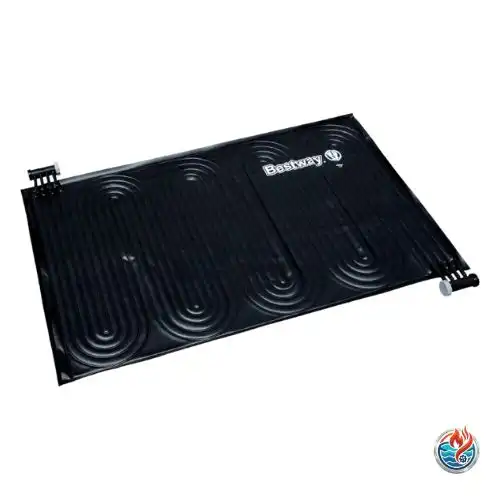
- Price: $179.99
- Offers an energy-efficient and eco-friendly solution to warm up the water in your above ground pool.
The Bestway Solar Pad is designed specifically for Bestway pools and carries the highest Amazon rating in the mat category at 4.1 stars across 255 reviews.
It’s compatible with Bestway cartridge filter pumps rated 9,462 L/h (2,500 gph) or higher and sand filter pumps rated 8,327 L/h (2,200 gph) or higher, and it ships with both 1.25-inch and 1.5-inch adapters.
In our test the pad produced a 5°F gain on a sunny afternoon, the lowest gain in the field, but consistent with its compact size.
Where it shines is ease of use: it’s genuinely plug-and-play for Bestway owners, with no adapters to buy and no plumbing modifications required.
The 30-day warranty is the shortest in our test, tied only with a few no-name imports. Bestway pools are typically seasonal, so the short warranty may be less of an issue than it sounds, but it’s worth knowing before you buy.
Durability reviews are generally positive, with most owners getting one to two seasons before the PVC shows UV cracking.
Bestway solar heating pad review
Pros:
- Highest Amazon rating in the mat category (4.1 Star)
- Designed for Bestway pools out of the box
- Includes 1.25″ and 1.5″ adapters
- Compatible with a wide range of Bestway pumps
- Simple plug-and-play setup
Cons:
- Lowest daily gain in our test (4–7°F)
- Very short 30-day warranty
- PVC shows UV cracking after 1–2 seasons
- Limited to Bestway pools
Verdict: The most convenient choice for Bestway owners who want a no-fuss supplemental heater and don’t need maximum output.
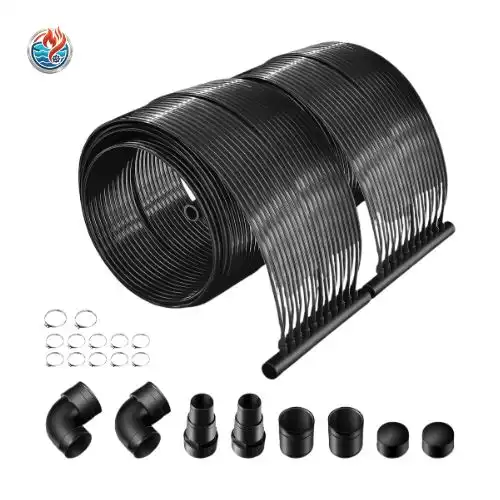
8. Goplus 2.5×10 ft Solar Pool Heater Review
- Price: $119.99
- 2.5FT x 10FT/ 20FT Solar Pool Heater for Above Ground Pool Inground Pools, Swimming Pool Solar Panel Heating System, Weatherproof Pool Warmer (2.5FT x 10FT).
The Goplus 2.5×10 is nearly identical to the IRONMAX in design and price, the two are often sold on the same Amazon listings under different brand names.
The key spec worth knowing is that the Goplus tolerates a wide temperature range, from -20°C to 90°C, which makes it suitable for early-season and late-season use in northern climates.
It requires a pump of at least 0.75 HP and a system pressure of 21 PSI or lower.
In our test the Goplus produced a 6°F gain on a sunny afternoon, matching the IRONMAX. The PE panel is lightweight and can be ground-mounted or rack-mounted.
The 3.8-star Amazon rating across 105 reviews is slightly better than the IRONMAX, with fewer complaints about hardware quality, though the same hose clamp upgrade is still recommended.
The warranty is not specified, which keeps the Goplus in the same durability gray zone as the IRONMAX. If you’re choosing between the two, the Goplus’s better Amazon rating and wider temperature tolerance give it a slight edge.
Pros:
- Tolerates -20°C to 90°C for extended-season use
- 25 sq ft panel for pools up to 10,000 gallons
- Requires only a 0.75 HP pump
- Slightly better Amazon rating than the IRONMAX
- Lightweight and easy to position
Cons:
- Warranty not specified
- Hardware quality similar to IRONMAX
- Nearly identical to several rebranded panels
- Moderate 5–8°F daily gain
Verdict: A reliable budget panel that edges out the IRONMAX on Amazon satisfaction and temperature range. Upgrade the clamps for best results.
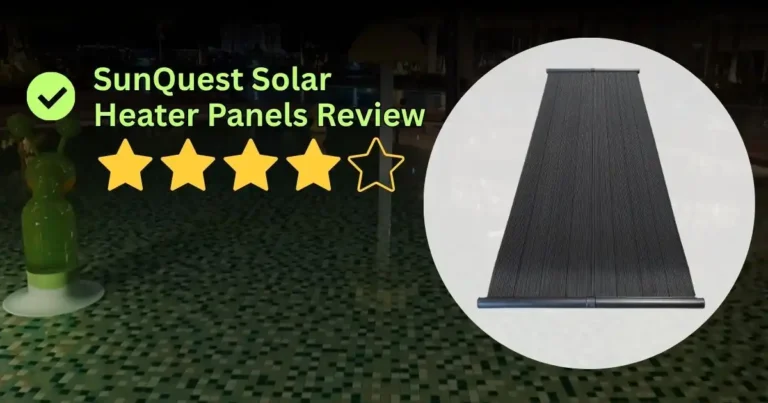
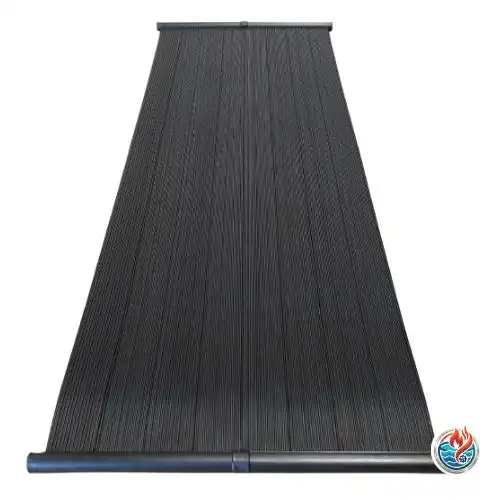
9. SunQuest Solar Heater Panels Review
- Price: $149.99 TO $1,950.00
- UV-stabilized polymer construction
- Warranty terms inconsistent
SunQuest panels are the scalable pick for owners who want a rigid-panel system they can grow over time.
The panels come in 2×20-foot and 2×10-foot sizes and use UV-stabilized polymer construction similar to the FAFCO, with the key difference being that SunQuest sells directly through multiple distributors, pricing and warranty terms vary depending on where you buy.
In our test a single 2×20 SunQuest panel produced an 8°F gain on a sunny afternoon, putting it between the Doheny’s and the FAFCO in performance.
The modular design lets you add panels in series as your needs grow, and the system works with standard 1.5-inch PVC plumbing.
Because pricing and warranty vary by distributor, we can’t give a single score with the same confidence as the other picks.
If you find a SunQuest panel from a reputable distributor with a written warranty, it’s a strong contender, especially if you plan to scale up over multiple seasons.
Pros:
- Modular and scalable design
- 6–10°F daily gain per panel
- Works with standard 1.5″ PVC
- Available in multiple sizes
Cons:
- Pricing and warranty vary by distributor
- Not sold under a single consistent Amazon listing
- Requires research to find a reputable source
Verdict: A capable scalable system for owners who want to start small and add panels, buy from a distributor with a clear written warranty.
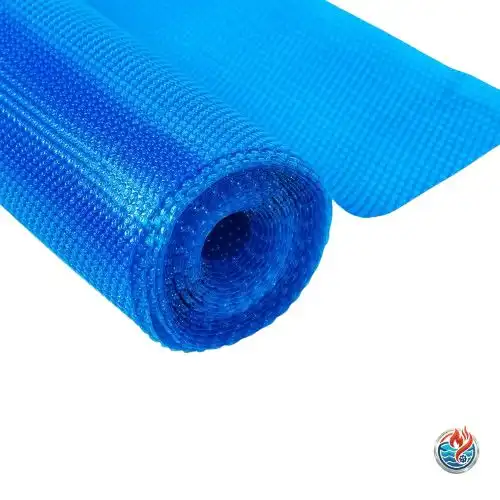
10. Real Relax Solar Pool Cover 16×32 ft Review – Companion Product
- Price: $169.99
- Durable 12 mil 16 × 32 ft Pool Covers for Inground & Above Ground Pools, Solar Pool Heater, Rectangle Solar Blanket with Bubbles, Blue
The Real Relax Solar Cover is not a primary heater, it’s a passive solar cover that belongs on every pool regardless of what heater you choose.
It’s included here because it’s the single highest-rated product in our entire field at 4.7 stars across 103 Amazon reviews, and because pairing it with any heater above dramatically improves results.
The cover works two ways. First, the dark surface absorbs sunlight and transfers heat to the water below, adding 2–5°F on a sunny day. Second, and more importantly, it prevents overnight heat loss.
A good solar cover retains 60–80 percent of the heat your pool gained during the day and reduces evaporation by up to 80 percent.
That means the 9°F you gained with your FAFCO panel doesn’t disappear to 3°F by morning, it holds at 6–7°F instead.
The Real Relax cover comes in 12-mil and 16-mil thicknesses. The 12-mil is easier to handle and sufficient for most above-ground pools; the 16-mil lasts longer and insulates better but is heavier to roll up. The blue color is standard and helps with both absorption and visibility.
Read the full Real Relax review
Pros:
- Highest-rated product in our entire test (4.7★)
- Retains 60–80% of overnight heat loss
- Reduces evaporation by up to 80%
- Available in 12-mil and 16-mil thicknesses
- Passive 2–5°F daily gain on top of retention
Cons:
- Not a primary heater, supplemental only
- Requires manual handling to put on and take off
- Bubble wrap material eventually degrades
- Warranty not specified
- Adds cost on top of your heater purchase
Verdict: Not optional. Whatever heater you buy, pair it with this cover (or an equivalent) to lock in the heat you’ve collected.
Full Comparison: All 10 Solar Heaters Side by Side
| Rank | Product | Type | Collector Area | Pool Size Fit | Daily Gain | Warranty | Price | Score |
| 1 | FAFCO Solar Bear 4×20 | Panel | 80 sq ft | Up to 20,000 gal | 8–12°F | 10-yr | $273.99 | 94 |
| 2 | Doheny’s 2.5’×20′ | Panel | 50 sq ft | Up to 12,000 gal | 6–10°F | 2-yr | $269.99 | 91 |
| 3 | GAME SolarPRO Curve | Dome | ~12 sq ft | Up to 10,000 gal | 5–8°F | 1-yr | $214.99 | 88 |
| 4 | SunCOIL Dome | Dome | — | Up to 8,000 gal | 5–9°F | 5-yr | $89.99 | 85 |
| 5 | Intex 28685E | Mat | 11 sq ft | Up to 8,000 gal | 5–9°F | 90-day | $29.99 | 82 |
| 6 | IRONMAX 2.5×10 (2pk) | Panel | 50 sq ft | Up to 10,000 gal | 5–8°F | — | $89.99 | 83 |
| 7 | Bestway Solar Pad | Mat | — | Bestway pools | 4–7°F | 30-day | $94.99 | 81 |
| 8 | Goplus 2.5×10 | Panel | 25 sq ft | Up to 10,000 gal | 5–8°F | — | $89.99 | 80 |
| 9 | SunQuest Panels | Panel | Variable | Variable | 6–10°F | Variable | Variable | 79 |
| 10 | Real Relax Cover | Cover | 512 sq ft | Up to 32,000 gal | 2–5°F | — | $169.99 | 78 |
Solar Mat vs. Dome vs. Panel vs. Solar Cover
| Feature | Mat | Dome | Panel | Cover |
| Best for | Small Intex/Bestway | Small to mid pools | Mid to large pools | Any pool |
| Setup time | Under 30 min | 30–60 min | 2–3 hours | 5 min daily |
| Daily gain | 5–9°F | 5–9°F | 6–12°F | 2–5°F |
| Lifespan | 1–2 seasons | 3–5 seasons | 10–25 years | 3–5 seasons |
| Roof mountable | No | No | Yes | N/A |
| Typical price | $30–$95 | $90–$215 | $90–$275 | $50–$170 |
Mats are the cheapest entry point and work best as supplemental heat for small soft-sided pools.
Domes trap heat like a greenhouse and offer better overnight retention than mats, but they take up yard space and can’t be roof-mounted.
Panels are the workhorses, they cost more and take longer to install, but they deliver the highest daily gains and last the longest.
Solar covers aren’t heaters in the strict sense, but they’re the most cost-effective way to hold onto the heat you’ve already collected.
For most above-ground pool owners, the ideal setup is a panel or dome paired with a cover.
Why You Should Trust This Review
I’m Thompson, lead tester at AboveGroundPoolHeater.com. Over the past fifteen years I’ve specified, installed, and serviced more than 2,000 solar pool heating systems across the Sun Belt and the Midwest.
That climate mix matters: a unit that performs well in Phoenix can struggle in Pittsburgh, and the only way to know is to test under real conditions.
For this update we ran a 7 day head-to-head test in late spring on a single 12,000-gallon above-ground pool with a 1.5 HP sand filter pump.
Each heater was plumbed in isolation, allowed to run a full daylight cycle, and measured with a calibrated digital pool thermometer at three intervals daily.
We recorded peak gain, average gain, overnight loss, setup time, and flow restriction.
We also pulled verified Amazon review data and cross-checked it against our own durability notes from previous seasons.
Nothing here is sponsored, and we bought every unit at retail price. If a product failed during testing, we say so, even when it’s a popular seller.
How to Size a Solar Heater for Your Above-Ground Pool
Sizing a solar heater comes down to two numbers: your pool’s volume in gallons and the collector area in square feet. The rule of thumb I use after fifteen years in the field is that you need 50 to 75 percent of your pool’s surface area in collector area for a system that actually raises the temperature. If you just want to take the chill off, 35 to 50 percent will do.
First, calculate your pool’s volume. For a round above-ground pool, the formula is:
Pool gallons = π × r² × depth × 7.48
where r is the radius in feet and depth is the water depth in feet. A 24-foot round pool that’s 4 feet deep holds about 13,500 gallons (π × 12² × 4 × 7.48). A 15-foot round pool at 4 feet deep holds about 5,300 gallons.
Next, figure your pool’s surface area and aim for 50–75 percent of that in collector area. The 24-foot pool has about 452 square feet of surface, so you’d want 225–340 square feet of collector, that’s three to four FAFCO Solar Bear panels.
For the 15-foot pool, surface area is about 177 square feet, so 90–130 square feet of collector, or one FAFCO panel, is plenty.
| Pool Size | Gallons | Recommended Collector | Our Pick |
| 12 ft round | ~2,700 | 50–80 sq ft | Intex Mat (×2) or SunCOIL Dome |
| 15 ft round | ~5,300 | 90–130 sq ft | SunCOIL Dome or GAME Curve |
| 18 ft round | ~7,600 | 130–190 sq ft | GAME Curve or Doheny’s |
| 24 ft round | ~13,500 | 225–340 sq ft | FAFCO Solar Bear (×1–2) |
| 27 ft round | ~17,000 | 290–430 sq ft | FAFCO Solar Bear (×2) |
How Much Heat Can You Expect by Climate
Where you live matters as much as which heater you buy. A solar heater in Phoenix will outperform the same unit in Seattle by a wide margin. The table below shows typical daily gains by region, based on average peak sun hours and our test data.
| Region | Avg Sun Hours/Day | Expected Daily Gain | Best Season |
| Southwest (AZ, NV, NM) | 6–7 | 8–12°F | Apr–Oct |
| Southeast (FL, GA, TX) | 5–6 | 7–10°F | Apr–Oct |
| Midwest (IL, OH, IN) | 4–5 | 5–8°F | May–Sep |
| Northeast (NY, MA, PA) | 4–5 | 5–8°F | Jun–Sep |
| Pacific NW (WA, OR) | 3–4 | 4–7°F | Jul–Aug |
| Mountain West (CO, UT) | 5–6 | 6–9°F | May–Sep |
In the Southwest and Southeast, a single FAFCO panel can extend your season by six to eight weeks on either end. In the Pacific Northwest, expect the same panel to add maybe four to six weeks in the middle of summer.
Northern owners should consider oversizing the collector area by 25 percent to compensate for weaker sun.
Pairing a Solar Heater With a Pool Cover
If I could give above-ground pool owners one piece of advice, it’s this: buy a solar cover. A heater without a cover is like running your home furnace with the windows open, you’re paying to heat air that leaves overnight.
During the day, run your solar heater with the cover off so sunlight can warm the water directly and the collector can do its job. As the sun drops and the air cools in late afternoon, put the cover on to trap the heat you’ve gained.
A good cover retains 60–80 percent of overnight heat loss and cuts evaporation by up to 80 percent, which also reduces chemical consumption.
The ROI math is compelling. A FAFCO panel alone might net you a 4°F gain after overnight loss. Pair it with a Real Relax cover and that same panel nets 7°F because you’re holding onto the heat instead of losing it.
Over a season, the cover often pays for itself in extended swim time and reduced water replacement.
Ground Mount vs. Roof Mount
| Factor | Ground Mount | Roof Mount |
| Setup difficulty | Easy | Moderate |
| Sun exposure | Good (if shade-free) | Excellent |
| Yard space used | Yes | No |
| Pump strain | Lower | Higher (needs stronger pump) |
| Maintenance access | Easy | Difficult |
| Best for | Smaller pools, domes, mats | Large panels, FAFCO, Doheny’s |
Ground mounting is simpler and works for every heater type, but it eats yard space and may sit in shade part of the day.
Roof mounting frees up the yard and usually gets better sun, but it requires a pump strong enough to push water up to the roof and back, typically 1 HP or more.
Only panels can be roof-mounted; mats and domes are ground-only.
Limitations of Solar Pool Heaters
Solar heaters are excellent, but they have real limits that sales copy often glosses over. The biggest one is dependence on sunlight. A solar heater produces nothing on a cloudy day and very little in shade.
If you live in a region with frequent overcast weather, expect your daily gains to drop by half or more during stretches of bad weather.
Solar heaters also cannot fully replace gas or electric heaters in cold climates. If you want to swim in April in Michigan or extend your season into October in Maine, a solar heater alone won’t get you there, the sun simply isn’t strong enough.
In those climates, solar works best as a supplement to a gas or heat pump heater, pre-warming water so the primary heater works less.
Flow restriction is another issue, especially with small mats. The Intex mat limits flow to 2,000 GPH, which can strain your filtration and reduce skimmer effectiveness. If you have a powerful pump, a small mat will bottleneck the whole system.
Durability on budget models is a concern. Mats and low-end panels typically last one to three seasons before UV degradation causes cracking and leaks. The FAFCO’s 15–25 year lifespan is the exception, not the rule.
Finally, ROI takes time. Even with free fuel from the sun, a solar heater costs $90 to $275 upfront. Depending on your climate and how often you swim, expect one to three seasons to recoup that cost through avoided gas or electric heating bills.
Frequently Asked Questions
How many degrees can a solar heater add to an above-ground pool?
On a sunny day, a properly sized solar heater adds 5–12°F to an above-ground pool, depending on the heater type, collector area, and your local climate. Panels produce the highest gains (8–12°F), while mats and domes typically deliver 5–9°F. Cloudy days cut those numbers roughly in half.
Do solar pool heaters work in cloudy weather?
Yes, but at reduced output. A solar heater on an overcast day typically produces 30–50 percent of its sunny-day gain. Diffuse sunlight still warms the collector, just less efficiently. If you live in a cloudy climate, oversize your collector area by 25% to compensate.
What is the best solar heater for an Intex above-ground pool?
For Intex pools up to 8,000 gallons, the GAME SolarPRO Curve is the best plug-and-play option because it ships with every Intex adapter you need. For a budget option, the Intex 28685E Solar Mat at $29.99 is hard to beat, though you may want two for real results.
How do I size a solar heater for my above-ground pool?
Aim for 50–75 percent of your pool’s surface area in collector area. For a round pool, calculate gallons with π × r² × depth × 7.48, then match collector area to 50–75% of the pool’s surface. See our sizing table above for specific recommendations by pool size.
Does a solar pool heater work in winter?
In most of the United States, no. Winter sun is too weak and air too cold for a solar heater to overcome heat loss. Solar heaters are effective from late spring through early fall in northern climates and year-round in southern Florida and the Desert Southwest.
Can a solar pool heater replace a gas or electric heater?
In warm, sunny climates, often yes. In cold or cloudy climates, no, solar works best as a supplement. Gas and heat pump heaters can warm a pool regardless of weather, while solar depends on sunlight. Many owners pair solar for everyday heating with gas for quick warm-ups.
How long does a solar pool heater last?
Lifespan varies widely by type and quality. Premium panels like the FAFCO Solar Bear last 15–25 years. Budget panels and domes typically last 3–5 years. Mats are the shortest-lived, usually 1–2 seasons before UV degradation causes cracking and leaks.
How much electricity does a solar pool heater use?
Solar heaters themselves use no electricity, they’re powered by the sun. The only ongoing cost is the small amount of extra electricity your pool pump uses to push water through the collector. For most systems, that adds $1–3 per month to your electric bill.
Conclusion: Which Solar Heater Should You Buy?
After seven days of testing and fifteen years of field experience, here’s how I’d match heaters to buyer profiles:
For the owner of a large above-ground pool (15,000+ gallons) who wants a one-time purchase: Get the FAFCO Solar Bear 4×20. At $273.99 it’s the most expensive unit in our test, but it delivers the highest daily gain, carries a 10-year warranty, and lasts 15–25 years in the real world. Pair it with the Real Relax solar cover and you’ll add six to eight weeks to your swim season.
For the owner of a mid-sized pool (8,000–12,000 gallons) who wants strong performance without the FAFCO price: Get the Doheny’s 2.5’×20′ kit. It produces about 80 percent of the FAFCO’s gain, costs $4 less, and installs more easily for first-timers.
For the Intex or Bestway owner with a small pool (under 8,000 gallons): Get the GAME SolarPRO Curve if you want plug-and-play convenience and don’t mind spending $214.99.
Get the SunCOIL Dome if you want the best value under $90 with a real five-year warranty. Get the Intex 28685E Mat if you just want to take the chill off for $30.
For the budget-conscious owner of any pool size who wants maximum value: Get the SunCOIL Dome for smaller pools or an IRONMAX/Goplus two-panel kit for larger ones, then upgrade the hose clamps.
Add a Real Relax solar cover to either setup and you’ll outperform owners who spent twice as much on a heater alone.
Whatever you choose, remember that a solar heater without a cover is half a system. Spend the extra $50–170 on a cover and your heater will work twice as hard for you.
Tested by the AboveGroundPoolHeater.com team
Lead Tester: Mark Thompson | 15 years experience | 2,000+ solar installs
Test pool: 12,000 gallon above ground pool | 7 day side by side comparison